
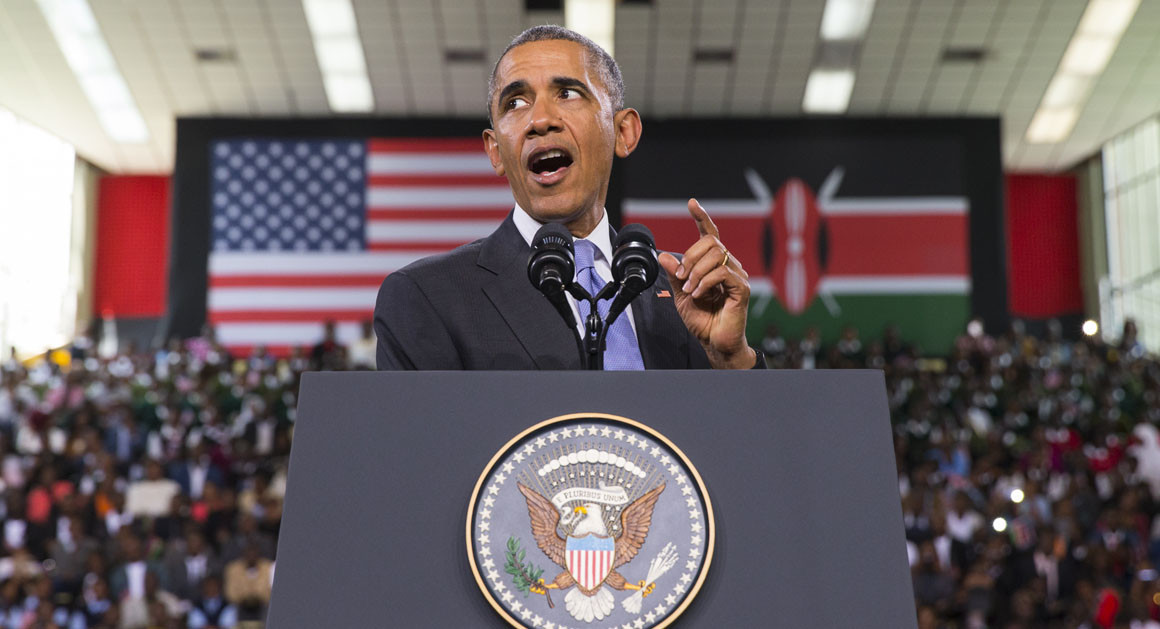
The Moment the World Changed
When Barack Obama took the oath of office on January 20, 2009, the world witnessed history unfold.
For the first time, the United States — long considered the world’s beacon of democracy — had elected a Black president. The symbolism was seismic. To millions of Black people around the world, and especially across Africa, it wasn’t just an election; it was an affirmation — that excellence, leadership, and global influence were not limited by race or geography.
Obama’s rise didn’t just change American politics. It reshaped the world’s perception of Black identity and gave Africa a new lens through which to see itself — as a continent capable of producing leaders, thinkers, and visionaries who could command the global stage.
From Kenya to the White House: A Global Story with African Roots
Barack Hussein Obama’s story is as global as it is personal. Born in Honolulu, Hawaii, to a Kenyan father and an American mother, Obama embodied what many call the African diaspora dream — one foot rooted in Africa, the other striding confidently across the world.
His father, Barack Obama Sr., came from Nyang’oma Kogelo in Kenya, a small village that became famous overnight when his son took office. Obama often referenced his African heritage, calling it a source of strength and identity.
In his 2009 speech in Accra, Ghana, he declared:
“Africa’s future is up to Africans.”
That single line captured his deep belief in self-determination, accountability, and empowerment — values that continue to shape how Africa is viewed and how Africans view themselves.
Redefining Black Excellence
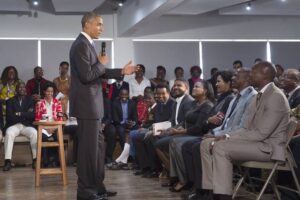 Obama’s presidency was a powerful global statement: that Black excellence is not limited to sports, music, or entertainment — but thrives in leadership, policy, diplomacy, and intellect.
Here’s how Obama changed perceptions of Black identity worldwide:
- Global Leadership with Grace: His calm demeanor and articulate vision dismantled centuries-old stereotypes of Black men as angry or unfit to lead.
- Representation Matters: Seeing a Black man in the most powerful political office in the world reshaped aspirations for an entire generation.
- Cultural Confidence: Obama’s presence on the world stage validated Black culture — from the rhythm of his speech to the swagger in his walk.
- Inspiring the Diaspora: From Harlem to Johannesburg, Obama became a symbol of possibility — proof that education, integrity, and perseverance could transcend prejudice.
For young Black professionals worldwide, Obama wasn’t just a political figure; he was living evidence that the global system could be navigated, influenced, and even transformed from within.
Obama and Africa: A Relationship of Inspiration and Responsibility
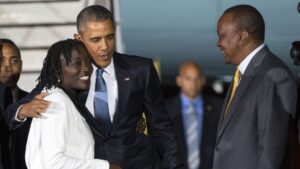 Obama’s African heritage naturally drew attention to his relationship with the continent. While he wasn’t born or raised in Africa, he carried its image on the global stage in a way few leaders ever have.
During his presidency, he approached Africa not as a charity case, but as a partner in progress. His policies and speeches focused less on aid and more on empowerment and enterprise.
Key Obama Initiatives That Empowered Africa:
- Power Africa (2013): A $7 billion initiative aimed at doubling electricity access across sub-Saharan Africa, fostering industrial growth and job creation.
- Young African Leaders Initiative (YALI): Providing mentorship, scholarships, and professional training to thousands of young Africans shaping their communities.
- U.S.-Africa Leaders Summit (2014): The largest gathering of African heads of state ever hosted by a U.S. president, emphasizing trade, security, and innovation.
Each of these programs had a consistent theme: Africa as a partner, not a problem. That narrative shift was revolutionary.
Changing the World’s View of Africa
Before Obama’s presidency, global perceptions of Africa were often clouded by images of famine, war, and poverty. Obama’s rise — as a son of an African man — forced the world to reconsider its stereotypes.
He reminded global audiences that Africa was not a continent of despair, but one of innovation, resilience, and promise.
His visits to countries like Kenya, Ghana, and South Africa were covered not as humanitarian missions but as celebrations of connection. The message was subtle but powerful:
“Africa is not defined by its struggles, but by its strength.”
That rebranding continues to influence international relations, tourism, and investment across the continent.
Bridging Continents: The Obama Legacy and Global Black Identity
Obama didn’t just belong to America; he belonged to the world. His presidency was a bridge — connecting Black people across continents and reminding them of shared history, shared struggle, and shared potential.
His success helped ignite movements such as:
- The rise of African creators and influencers (like Wode Maya and Trevor Noah) reclaiming the African narrative.
- Diaspora-led investment initiatives, where Africans abroad are returning to invest in startups, real estate, and technology.
- Youth empowerment programs focused on innovation, entrepreneurship, and leadership development.
By embodying global Black excellence, Obama inspired Africans to think beyond borders and to see their identities not as obstacles, but as assets.
Critics and the Realities of Legacy
Of course, not everyone agreed with Obama’s approach to Africa. Some argued that his policies were too cautious, that he didn’t visit enough countries, or that he failed to address crises aggressively.
But even his critics acknowledge one truth: Obama changed the conversation.
He replaced pity with partnership. He shifted focus from aid to investment. He treated African leaders as equals, not subordinates.
In doing so, he helped pave the way for a new global dialogue about Africa’s agency, dignity, and direction.
Africa’s Next Chapter: From Inspiration to Investment
Obama’s story and message — that Africa’s future belongs to Africans — is more than political rhetoric. It’s a call to action.
Today, Africa stands on the brink of extraordinary growth:
- Home to the world’s youngest population.
- The fastest-growing digital economy.
- A rapidly expanding middle class driving demand for goods and services.
Yet, the continent needs more than inspiration — it needs investment.
Why You Should Invest in Africa:
- Untapped Markets: From fintech to renewable energy, Africa offers vast opportunities.
- Human Capital: A youthful, tech-savvy population ready to innovate.
- Strategic Location: A growing hub for global trade and logistics.
- High Returns: Emerging sectors are yielding some of the best ROI worldwide.
Obama’s influence opened doors of perception — now it’s time to walk through them.
Call to Action: Invest in the Africa Obama Believed In
Barack Obama’s legacy is not just written in history books; it’s unfolding in Africa’s cities, universities, and startups.
He reminded us that the story of Black excellence and African potential is far from over — it’s only beginning.
If you believe in the power of change, invest in Africa.
Invest in the vision Obama saw — a continent rising on its own terms, powered by innovation, unity, and ambition.
The world once said “Yes We Can.”
Now Africa is saying — “Yes We Are.”
Call-to-Share Section
Inspired by Obama’s legacy? Share this article.
Help change the global narrative about Africa and Black excellence.