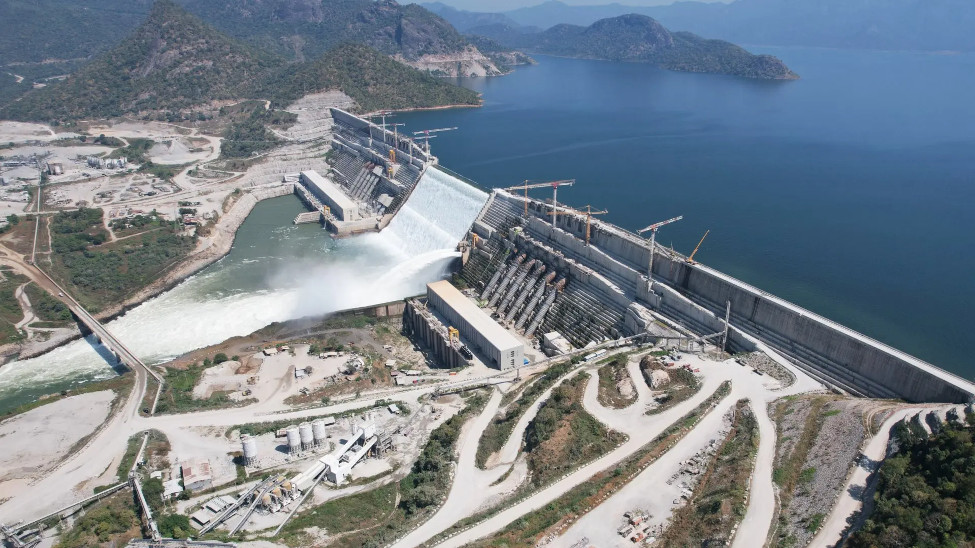
The waters of the Blue Nile have carried life for centuries — but now, they carry something even greater: the promise of Africa’s future. The Grand Ethiopian Renaissance Dam (GERD), the largest hydroelectric project in Africa, stands not only as a feat of engineering but also as a bold declaration that Africa is ready to take control of its own development story.
This is more than a dam — it’s a message. A message that Africa is open for growth, ready for investment, and determined to power its own destiny.
A Dream Carved in Concrete and Water

The GERD sits on the Blue Nile in Ethiopia’s Benishangul-Gumuz region, about 15 kilometers from the Sudanese border. Construction began in 2011, fueled almost entirely by Ethiopian funding and public bonds, not foreign aid. That fact alone is extraordinary — a developing nation financing a multi-billion-dollar megaproject on its own terms.
When fully operational, the GERD will produce over 6,000 megawatts of electricity — enough to power millions of homes and make Ethiopia a regional energy exporter to neighbors like Sudan, Kenya, and Djibouti.
But beyond power generation, GERD represents something deeper: African ambition. It’s a statement that nations across the continent can think big, act boldly, and achieve great things through determination, collaboration, and strategic investment.
From Controversy to Cooperation
Of course, no great project comes without challenges. The GERD has been a source of regional tension, particularly with Egypt and Sudan, who depend heavily on the Nile for water. Egypt fears the dam could reduce its water supply, while Ethiopia insists it is managing the project responsibly and equitably.
Yet, these diplomatic tensions also highlight something remarkable: African nations are now solving African problems. Negotiations between Ethiopia, Egypt, and Sudan have been largely handled within African frameworks, guided by the African Union (AU) rather than foreign powers.
That shift — from dependency to self-determination — is itself a reflection of the continent’s maturing political and economic leadership. The GERD is not just reshaping the Nile; it’s reshaping how Africa manages its own affairs.
A Catalyst for Regional Development
The impact of the GERD reaches far beyond Ethiopia’s borders. Electricity is one of the biggest constraints to Africa’s industrial growth — and Ethiopia’s plan to export affordable energy could transform the regional economy.
Here’s what the GERD means for Africa’s broader development:
- Energy Access for Millions: Over 600 million Africans still live without reliable electricity. GERD’s surplus power can be sold across the East African grid, driving industrialization and improving quality of life.
- Increased Trade and Integration: Shared power infrastructure encourages cooperation, reduces costs, and strengthens the African Continental Free Trade Area (AfCFTA) goals.
- Job Creation and Skills Development: Large-scale projects like GERD create local jobs in engineering, construction, and management, while building long-term technical expertise.
- Environmental Sustainability: By producing renewable hydroelectric energy, Ethiopia reduces reliance on fossil fuels, aligning with global climate goals and showcasing Africa’s commitment to green growth.
Through these outcomes, GERD serves as both a national project and a continental blueprint — proof that Africa can fund, build, and operate infrastructure that changes lives and spurs sustainable growth.
A Mirror for Africa’s Emerging Confidence

The GERD is part of a larger story unfolding across Africa — a story of transformation. From the Lekki Deep Sea Port in Nigeria to Kenya’s Konza Technopolis and Rwanda’s innovation hubs, the continent is redefining its economic narrative.
For decades, Africa was seen mainly as a recipient of aid. Now, it’s becoming a magnet for opportunity. African governments and private investors are increasingly taking ownership of infrastructure and technology projects, while international partners shift from donors to collaborators.
The GERD captures that change perfectly. It demonstrates:
- Financial Independence: Ethiopia raised funds domestically through bond sales and public contributions — a symbol of self-reliance.
- Technological Capability: African engineers, planners, and technicians have been central to the dam’s construction, showcasing world-class expertise.
- Resilient Vision: Despite political disputes and global economic challenges, Ethiopia stayed the course for over a decade — a lesson in persistence.
In short, GERD tells investors one thing loud and clear: Africa is serious about development.
The Broader Message: Africa Is Open for Investment
The success of GERD underscores the enormous investment potential across Africa, especially in sectors like:
- Renewable Energy: Africa has abundant solar, wind, and hydro resources yet remains underpowered. Projects like GERD prove that sustainable energy can be profitable.
- Infrastructure and Logistics: As new trade corridors and ports emerge, opportunities in transport, logistics, and digital infrastructure are expanding rapidly.
- Agriculture and Food Security: Reliable power from dams like GERD can support irrigation, food processing, and cold storage — vital for feeding a growing population.
- Technology and Industry: Electricity access lays the foundation for innovation ecosystems, manufacturing, and digital economies.
Africa’s youthful population, rapid urbanization, and expanding middle class make it one of the most promising investment frontiers in the world. With the right infrastructure — like the GERD — the potential is limitless.
Bridging the Power Gap: From Symbol to System
While the GERD is monumental, it’s also a starting point. Africa’s overall energy generation remains a fraction of what’s needed to drive full-scale industrialization. But the momentum is building.
By connecting national grids, investing in cross-border projects, and harmonizing regulations, African nations can create an integrated power network that supports manufacturing, transport, and digital services across the continent.
In this way, the GERD can serve as a model project — inspiring other African nations to pursue bold infrastructure initiatives that combine economic growth with sustainability and social impact.
The Human Story Behind the Dam
Beyond economics and geopolitics lies a human story — one of pride, sacrifice, and vision. Ordinary Ethiopians, from teachers to taxi drivers, contributed financially to the dam’s construction. Schoolchildren learned about it in class as a source of national pride.
That spirit — a collective belief in self-determination — is what truly defines the Renaissance in the Grand Ethiopian Renaissance Dam. It’s not just a reservoir of water; it’s a reservoir of hope, unity, and African ingenuity.
A Call to Action: Invest in Africa’s Future
The GERD stands as proof that Africa can build world-class infrastructure and manage it effectively. It’s time for global investors, governments, and development institutions to recognize what this symbolizes — a continent that is ready, capable, and ambitious.
Africa doesn’t need charity; it needs partnerships. It needs investors who see beyond risk to recognize opportunity — in energy, agriculture, technology, and people.
The next chapter of global growth will be written not just in Silicon Valley or Shanghai, but in Addis Ababa, Nairobi, Lagos, and Accra. The GERD is just the beginning of that story.